
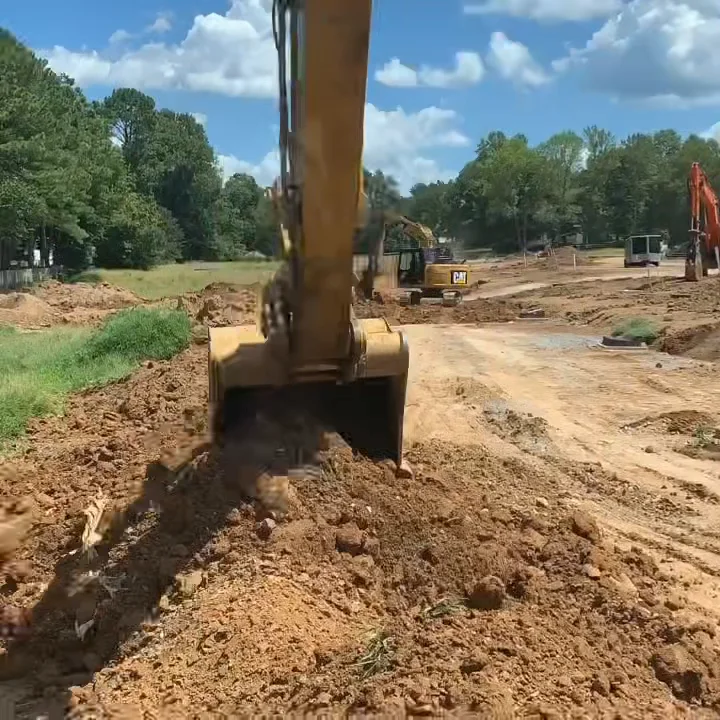
Excavator bucket working in dug earth at close range.

SitePro services

Excavation in Franklin, Arrington, and Williamson County, Tennessee

Excavation opens the ground and removes material where the project calls for it.

Discuss your project

Excavation / Planning the work

Your project

What does your site need?

Show us the excavation area and explain what it is for. Include dimensions or plans if available, along with access information and any existing conditions we should know about.

Helpful details

  1. 01What part of the project needs excavation?
  2. 02What existing conditions or access should the office understand?
  3. 03Are plans, dimensions, or site photos available?

Plans or current photos can help explain the site. Get started with a few details.

Excavation is one of four SitePro services. SitePro is a sister company of Petersen & Sons of Arrington, Tennessee. SitePro serves Franklin, Arrington, and Williamson County, Tennessee.

Discuss excavation

Excavation in depth

How excavation works.

What excavation involves

Excavation opens the ground. It removes earth, and sometimes rock, to a planned depth and footprint so that something else can take its place: a foundation, a basin, a bed of compacted fill, or simply a stable surface where unsuitable material used to be.

The cut is only half of the job. Everything that comes out has to go somewhere, in a known quantity, by a route that the site can carry. Planning the cut and planning the material are the same conversation.

Planning the cut

Three things shape an excavation before a machine arrives. Dimensions and depth, from plans or from a clear description of what the space is for. Access: how equipment and trucks reach the area and what they pass on the way. Existing conditions: what is already in the ground or next to it, from structures and utilities to water and rock.

The more of that the office knows up front, the more accurately it can review the request. Plans, dimensions, access notes, and current photos are the details that matter most.

Where the material goes

Excavated material is managed, not just removed. Suitable soil can be placed and compacted as fill elsewhere on the site, which is often the most efficient use of it. Material that is not suitable is set aside or hauled away. Rock is handled on its own terms.

On SitePro sites, a screening plant separates soil from rock and oversize material, and a crusher reduces rock to usable sizes. Both are in the footage on the Our Work page. Processing material on site means less of it has to leave, and less has to be brought in.

Equipment on an excavation site

Excavators do the cutting and loading; their size is matched to the depth and the room available. Load trucks carry material across the site or off it. Where larger areas are cut and spread, a tractor-pulled scraper moves earth in volume. A compaction roller finishes fill where fill is placed.

Excavation within the larger project

Excavation is usually one step in a sequence. A cut becomes a pad once it is filled and compacted; a basin becomes a pond once its banks are shaped; a cleared footprint becomes a foundation when the concrete crew arrives. SitePro’s grading and sitework cover the steps on either side, and its sister company, Petersen & Sons, has been a concrete and foundation contractor in Arrington, Tennessee since 2002. Describe the whole project in your request, not only the hole.

Where we work

SitePro serves Franklin, Arrington, and Williamson County, Tennessee. Tell us where the site is in your request, and our office will follow up.

Questions

Common questions about excavation.

What does the office need to know about access?

How equipment and trucks will reach the work area: the entrance, the route across the property, gates, soft ground, overhead lines, and anything the route passes close to. Access decides which machines fit and how material moves.

What happens to the dirt and rock?

Suitable soil is often reused as compacted fill on the same site. Unsuitable material is set aside or hauled away. Rock can be screened and crushed on site into usable sizes rather than hauled off whole. The request review covers which of those applies to your project.

Can you work near an existing building or driveway?

Tell us what is there. Existing structures, slabs, drives, septic systems, and utilities all shape how a cut is planned and what equipment fits. The office reviews those conditions as part of your request.

What is unsuitable material?

Soil that will not hold a grade or support a load: soft, wet, organic, or loose ground. Excavation removes it so that compacted fill, or the structure itself, has something sound to sit on.

What is the difference between excavation and sitework?

Excavation is the cut: opening the ground and removing material. Sitework is the wider preparation of the whole site around it, including grading, fill, and the ground between the cut and the rest of the project.

Do you need plans before you can review an excavation request?

No. Plans and dimensions help, and current photos show the site as it is. A clear description of what the excavation is for is enough to start.

Is a request a quote?

No. A request tells our office where the work is and what you have in mind. The office reviews it and follows up with you; any quote or commitment comes after that conversation.

Discuss excavation