
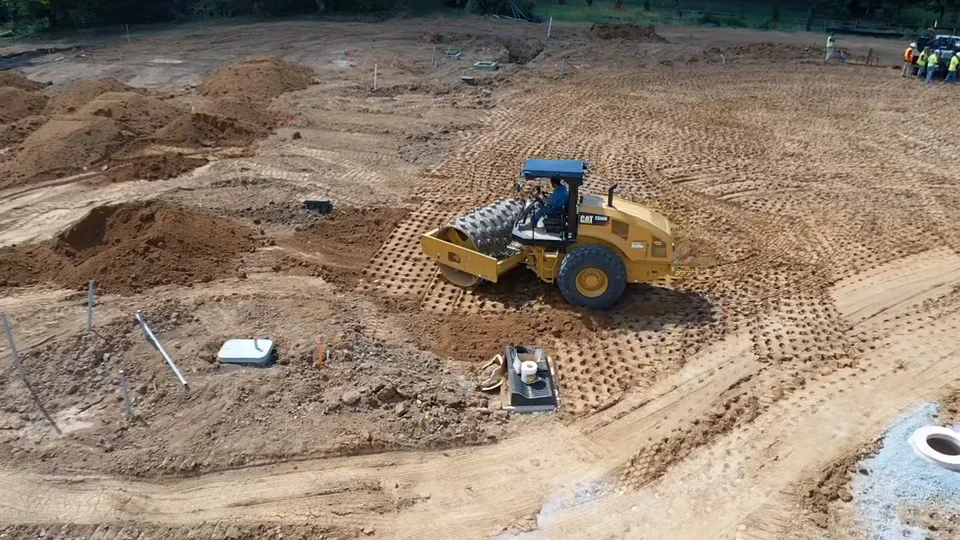
Compaction roller viewed from above on a prepared site.

SitePro services

Grading in Franklin, Arrington, and Williamson County, Tennessee

Grading changes the shape and level of the ground.

Discuss your project

Grading / Planning the work

Your project

What does your site need?

Tell us where the grade needs to change and the result you are aiming for. Existing and proposed elevations, drainage notes, and marked plans help explain the work. Current site photos are useful too.

Helpful details

  1. 01Where on the property is the work?
  2. 02What needs to change about the existing ground?
  3. 03Do you have plans, elevations, drainage notes, or current photos?

Plans or current photos can help explain the site. Get started with a few details.

Grading is one of four SitePro services. SitePro is a sister company of Petersen & Sons of Arrington, Tennessee. SitePro serves Franklin, Arrington, and Williamson County, Tennessee.

Discuss grading

Grading in depth

How grading works.

What grading does

Grading changes the shape and level of the ground. It cuts the high spots, fills the low ones, and sets the slopes that decide where water goes. Every site has a grade already; grading makes it the one the project needs.

The work falls into two stages. Rough grading moves the bulk of the material and establishes the general shape and elevations. Finish grading brings the surface to its final level and texture, ready for whatever comes next: a foundation, a slab, a drive, a lawn, or the bank of a pond.

When a site needs grading

Most grading requests start with one of a few situations. A piece of ground needs a level area for something that will be built on it. Water collects where it should not, or runs toward a structure instead of away from it. A slope is too steep to use or to mow. Soil left behind by earlier work needs to be spread, shaped, and settled.

In each case the question is the same: what does the ground look like now, and what should it look like when the work is done? Elevations, drainage notes, and a marked plan answer it precisely. Current photos and a clear description are a good start when those do not exist yet.

How the work is done

Grading is sequence as much as machinery. Material is cut from where there is too much and placed where there is too little, in layers that can be compacted properly rather than in one loose pile. Slopes are set to carry water the way the plan intends. The surface is then finished to the tolerance the next stage calls for.

Compaction matters as much as shape. Fill that is placed and rolled in controlled lifts holds its grade and supports what is built on it; fill that is simply pushed into place settles later. The compaction roller in SitePro’s footage is on site for exactly that reason.

Equipment on a grading site

The equipment matches the size of the job. On larger areas a tractor-pulled scraper cuts, carries, and spreads material in one pass, which is the efficient way to move earth across a site. Excavators and load trucks handle cuts, fills, and the material that has to travel further. A compaction roller closes the work.

You can see that equipment at work in the video and photographs on the Our Work page.

Grading and the next stage

Grading rarely stands alone. It prepares the ground for a foundation, a building pad, a drive, or a pond, and it often follows excavation on the same site. If your project continues with concrete or a foundation, SitePro’s sister company, Petersen & Sons, has been a concrete and foundation contractor in Arrington, Tennessee since 2002. Mention it in your request and the office can look at the whole sequence.

Where we work

SitePro serves Franklin, Arrington, and Williamson County, Tennessee. Tell us where the site is in your request, and our office will follow up.

Questions

Common questions about grading.

What is the difference between grading and excavation?

Excavation opens the ground and removes material to a planned depth and shape. Grading shapes the surface that is left, or the material that is placed, to the levels and slopes the project needs. Many sites need both, often in that order.

What is finish grading?

Finish grading is the last pass. Rough grading sets the general shape and elevations; finish grading brings the surface to its final level and texture so the next stage, from a slab to a lawn, can go straight on top.

How does grading affect drainage?

Water follows the grade. Slopes that fall away from a structure carry water off; low spots and flat areas hold it. Setting those slopes deliberately is a large part of what grading is for, and drainage notes on a plan tell us what the finished site has to do with its water.

What should I send with a grading request?

The location, the part of the property involved, and what needs to change about the existing ground. Existing and proposed elevations, drainage notes, and marked plans are ideal. Current photos help when plans do not exist yet.

Do I need a survey or engineered plans before I contact you?

No. A description and current photos are enough to start a conversation. Where elevations or a plan already exist, they let the office understand the work more precisely.

Is a request a quote?

No. A request tells our office where the work is and what you have in mind. The office reviews it and follows up with you; any quote or commitment comes after that conversation.

Can grading be coordinated with a new foundation?

Yes. SitePro is the sister company of Petersen & Sons. Note in your request that the project continues with a foundation or concrete, and the office can review the ground work and the next stage together.

Discuss grading